


Solar
24/7 Renewable Baseload Power for Hyperscale AI Data Centers
Fully integrated 100–500 MW solar-thermal power platform — deployed in 12–14 months, not 3–5 years. Firm, dispatchable, carbon-free generation that runs 8,760 hours a year.
Three Integrated Steps. One Reliable Outcome.
From sunlight to socket – our integrated architecture ensures efficient conversion, long-duration storage, and dependable power delivery around the clock.
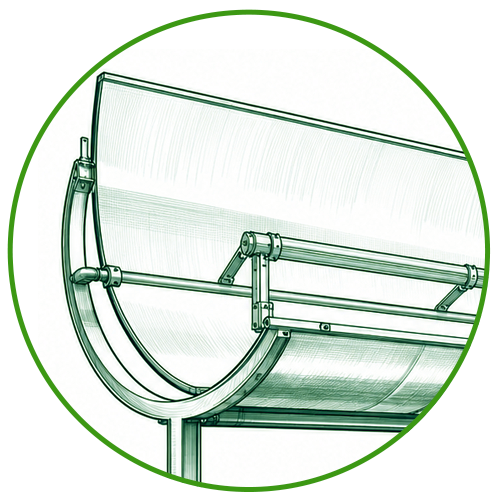
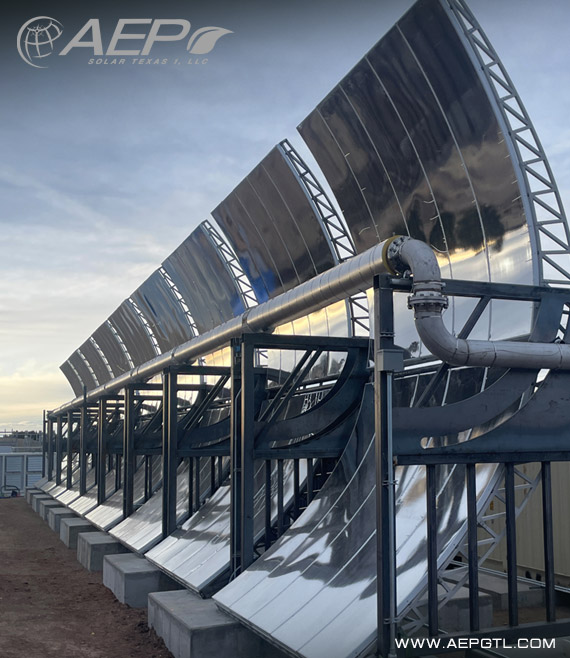
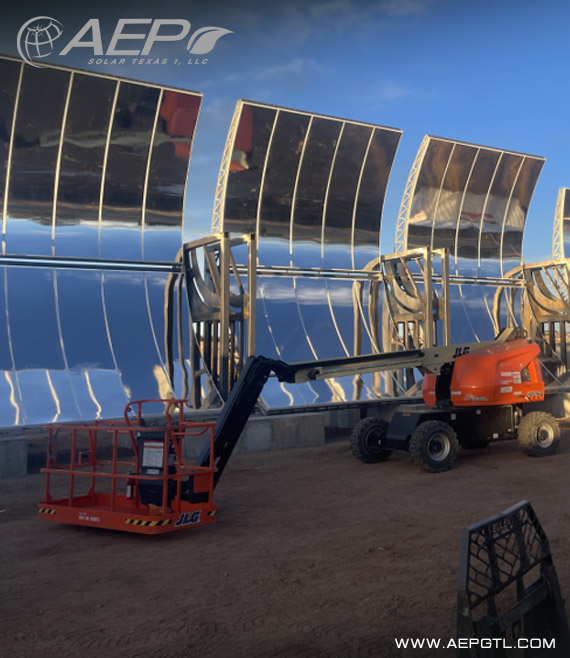
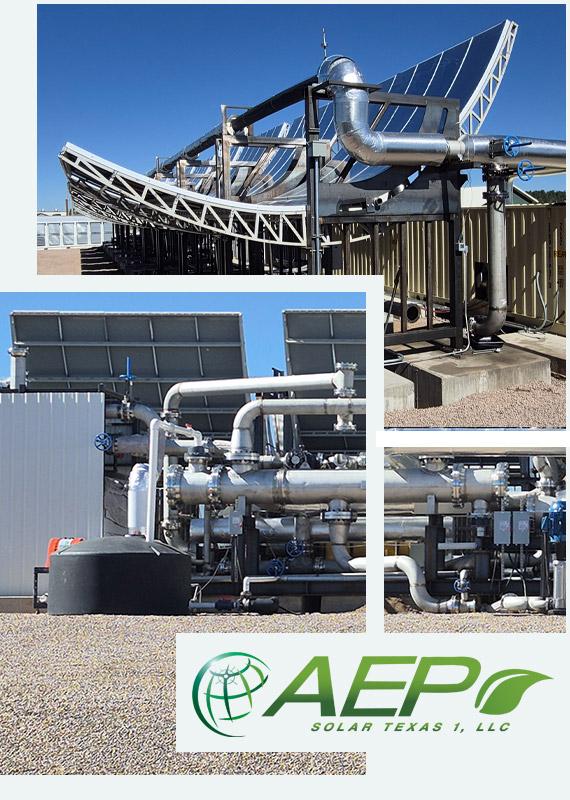
Parabolic Trough Collection
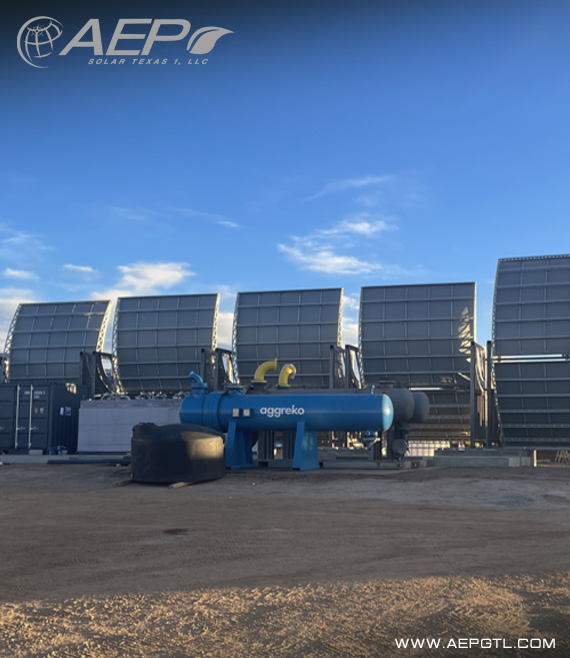
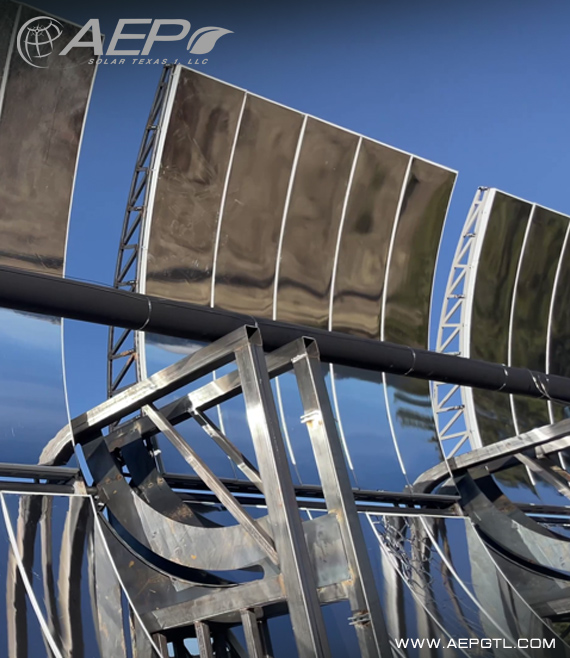
Curved mirrors concentrate sunlight into high-temperature thermal heat.
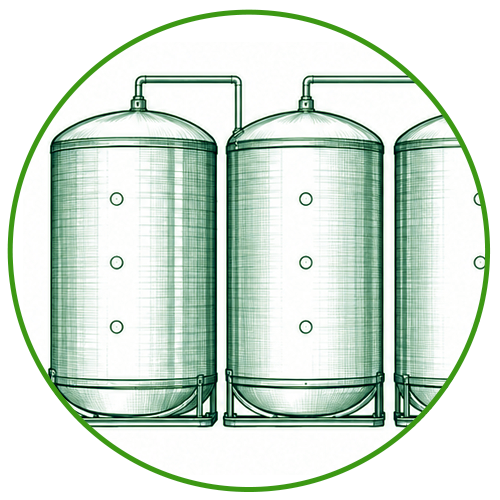
Thermal Energy Storage (TESS)
Heat stored in a phase-change medium (<1% daily loss) enables round-the-clock dispatch, up to 8 -12 days.
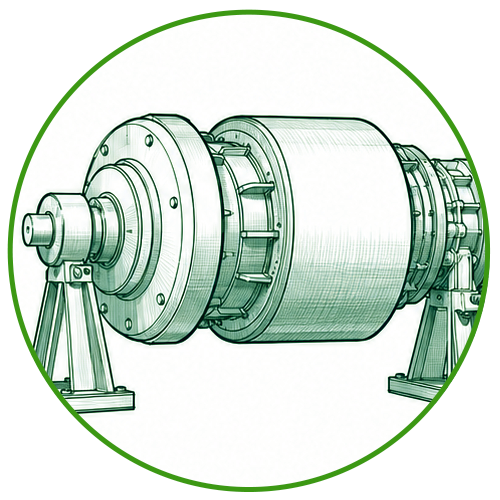
Rankine Cycle Steam Turbines
Stored heat drives steam turbines — the same Rankine cycle producing 80% of world electricity today. N+1 modular units keep power flowing during STSR maintenance.

Firm, dispatchable, carbon-free generation — running 8,760 hours a year.
N+1 design isolates units for STSR maintenance without interrupting delivery to your data center.
8760
Hours of operation each year
N+ 1
Modular redundancy for uptime
100%
Carbon-free at point of use
Continuous renewable power, without the conventional limitations.
From generation and long-duration storage to dependable delivery, STSR provides firm renewable power around the clock.
| Feature | AEP STSR Platform | Conventional Solar PV + Battery |
|---|---|---|
|
Power Output
|
AEP STSR — Firm 24/7 baseload (8,760 hrs/yr) | Conventional — Intermittent; battery limited |
|
Storage Duration
|
AEP STSR — Overbuilt, long-duration thermal | Conventional — 4–8 hour battery discharge |
|
Daily Degradation
|
AEP STSR — Less than 1% | Conventional — Significant battery fade |
|
Asset Life
|
AEP STSR — 25+ years | Conventional — 10–15 year battery replacement |
|
Grid Dependency
|
AEP STSR — Fully off-grid capable | Conventional — Requires grid backup at night |
|
Land Footprint
|
AEP STSR — 100 MW in 12 acres (60× less) | Conventional — Large land requirements |
|
Fuel Source
|
AEP STSR — 100% renewable solar thermal | Conventional — Solar PV + grid mix |
|
Carbon
|
AEP STSR — Zero Scope 2 emissions (hourly) | Conventional — Annual matching only |
Grounded in operating performance data — not forecasts.
Multiple plants commissioned to date, headlined by a KBR-delivered 6 MW reference facility available for site visits and technical due diligence at any time.
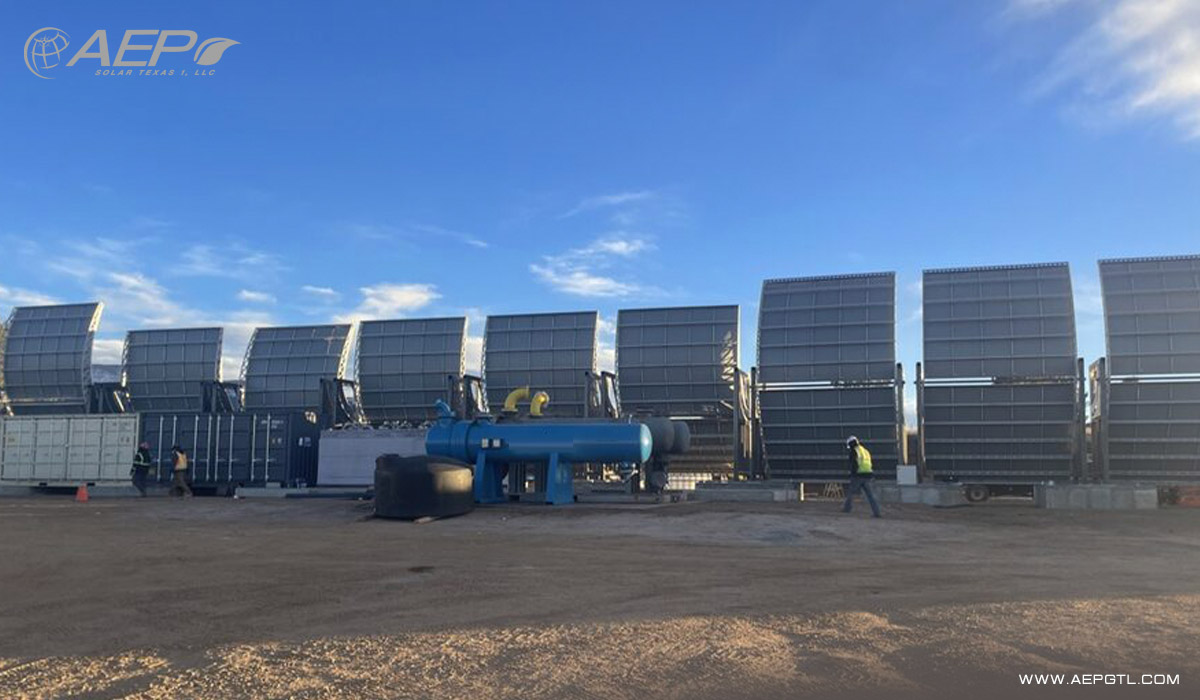
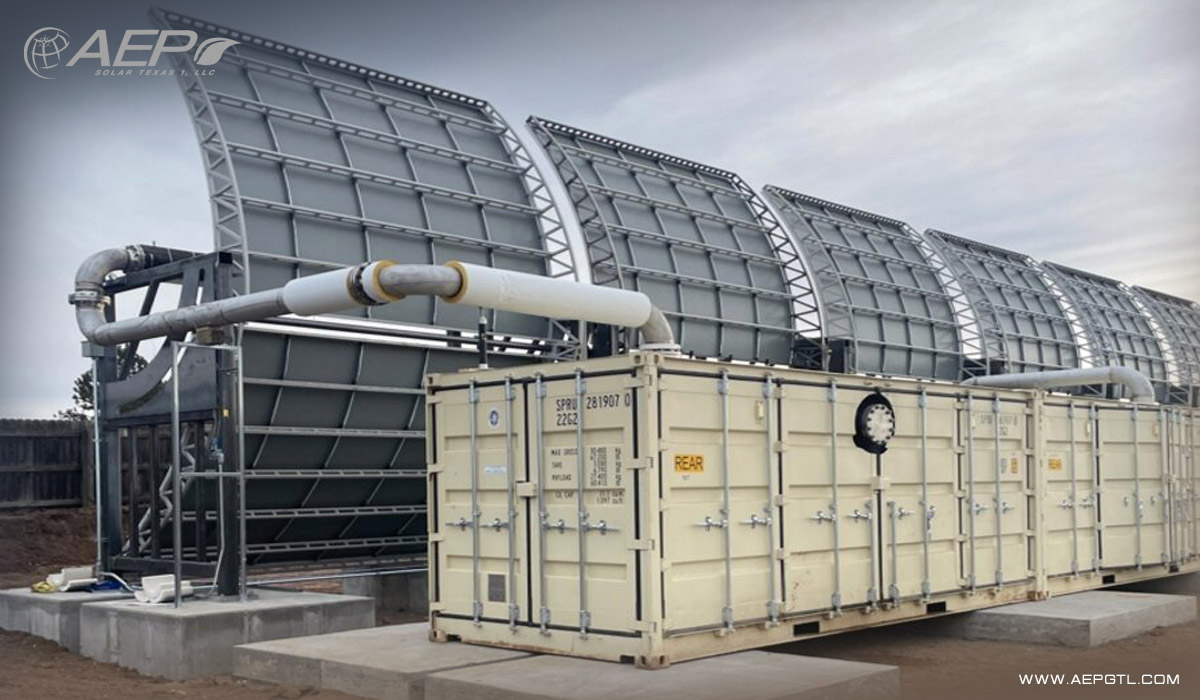
Commissioned January 2026 — Operating Today
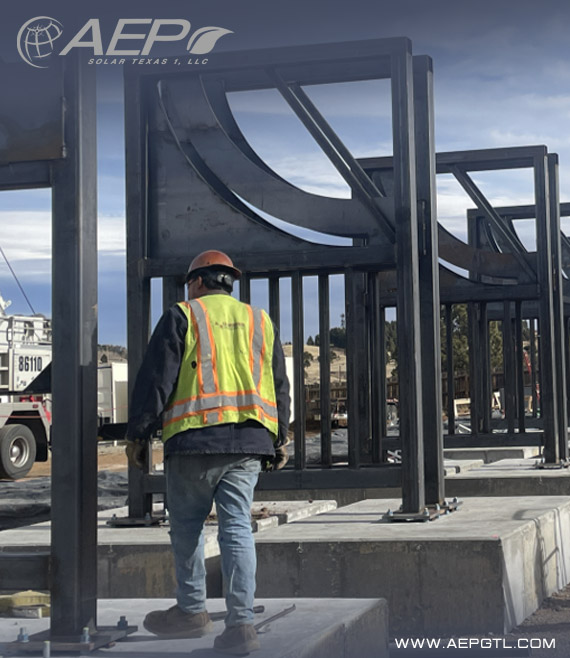
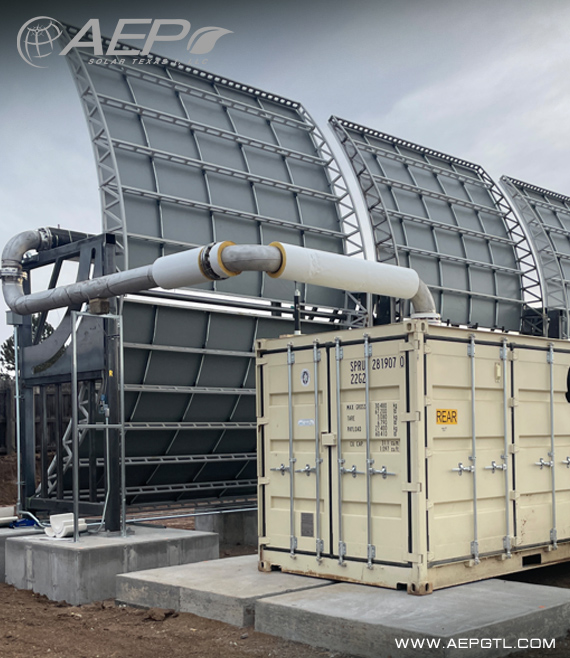
The KBR-delivered 6 MW reference plant is in commercial operation — a de-risked, fully commissioned commercial-scale asset available for site tours, walk-downs, and independent engineer review.
The 100MW project deploys the identical modular platform. Scaling from 100MW to 500MW is purely additive — drop in additional standardized modules. No re-engineering. No re-design. No first-of-a-kind risk.
De-risked. Built, commissioned, operating today at scale.
FROM NTP TO COD
Typical Deployment Timeline: 12-14 Months
Firm renewable energy delivery — step by step
From capturing solar energy to delivering reliable DC power, the Omni-DC™ system uses a streamlined five-stage process designed for continuous, efficient energy delivery.
Solar Collection
Thermal Storage
Rankine Cycle
SiC Rectification
DC Handoff

KEY ADVANTAGE
A more direct path from sunlight to usable power
The Omni-DC™ handoff removes unnecessary AC/DC/AC conversion stages, helping avoid approximately 4–7% conversion losses while also reducing dependence on lengthy grid interconnection processes and costly transmission infrastructure.
Delivering power directly to the data-center DC bus
The OMNI-DC™ Handoff System is designed to deliver renewable energy directly to a data center’s DC infrastructure. By supplying power at the DC bus, the system creates a more direct connection between solar-thermal generation and the facility’s electrical needs.
Solar energy is collected and stored as thermal energy before being converted into electricity through a Rankine turbine. The generated power then passes through a silicon carbide (SiC) rectifier, producing 24 kV DC for delivery directly to the data-center DC bus.
This streamlined approach helps reduce unnecessary power-conversion stages between generation and the data center, creating a simpler pathway from solar-thermal collection → thermal storage → power generation → DC delivery.
System Specification & Component Selection
Engineered for performance, built on proven technology, and backed by real-world operation.
KBR-Certified Reference Plant
Operating Since January 2026
KBR at a Glance & EPC Scope
KBR brings global engineering expertise, proven project delivery, and large-scale execution capabilities to support the successful development of the project. As the EPC partner, KBR provides an integrated approach covering engineering, procurement, construction, commissioning, and long-term performance.
$ 8.3B
Market Cap
NYSE: KBR
$ 7.7B
REVENUE (FY25)
Diversified engineering
~ 35000
EMPLOYEES
Global operations
6MW
REFERENCE PLANT
Commissioned Jan 2026
EPC Contract Scope